

- July, 2026
Our Approach to Large-Scale Building Construction Projects
The commercial construction industry is evolving rapidly as businesses seek buildings that are not only visually appealing but also functional, sustainable, and future-ready. Modern architecture has shifted beyond traditional designs to focus on efficiency, technology, and environmental responsibility. Today, commercial buildings are designed to enhance productivity, reduce operational costs, and provide exceptional experiences for occupants and visitors alike.
At Hoysala Projects, we believe that modern architecture plays a vital role in creating commercial spaces that stand the test of time. By combining innovative design principles with quality construction practices, we deliver buildings that meet the evolving needs of businesses and communities.
Sustainable Building Design
Sustainability has become one of the defining trends in commercial architecture. Businesses are increasingly investing in environmentally responsible buildings that minimize energy consumption and reduce their carbon footprint.
Modern commercial buildings now feature:
- Energy-efficient lighting systems
- Solar power integration
- Rainwater harvesting
- Natural ventilation
- Green roofs and landscaped spaces
- Eco-friendly construction materials
- These sustainable practices not only benefit the environment but also significantly reduce long-term operating costs.
Smart Building Technology
Technology has transformed the way commercial buildings operate. Smart buildings use automation systems to improve efficiency, security, and comfort.
Popular smart building features include:
- Intelligent lighting controls
- Automated climate management
- Smart security and surveillance
- Digital access control systems
- Building Management Systems (BMS)
- IoT-enabled monitoring solutions
These technologies improve operational efficiency while providing a better experience for building occupants.
Flexible and Multi-Purpose Spaces
Modern businesses require adaptable workspaces that can evolve with changing business needs. Commercial buildings are increasingly designed with flexible floor plans that support collaboration, expansion, and multiple business functions.
Features include:
- Open office layouts
- Modular workspaces
- Collaborative meeting areas
- Multi-functional commercial spaces
- Flexible retail environments
Such designs maximize space utilization while allowing businesses to grow without significant structural modifications.
Glass Facades and Natural Lighting
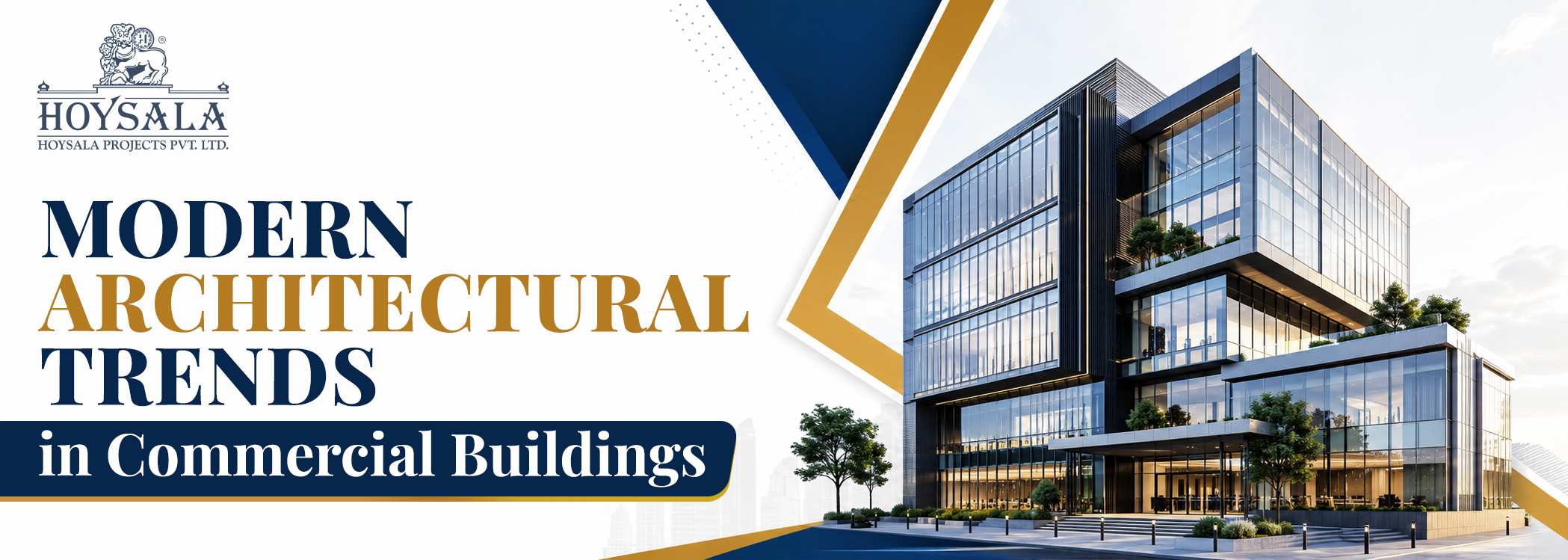
One of the most recognizable trends in modern commercial architecture is the use of large glass facades. These designs allow natural light to enter the building, creating brighter and more inviting interiors while reducing dependence on artificial lighting.
Benefits include:
- Improved employee productivity
- Reduced energy consumption
- Modern aesthetic appeal
- Better connection between indoor and outdoor spaces
High-performance glass also enhances energy efficiency by controlling heat gain and reducing glare.
Energy-Efficient Building Materials
Advancements in construction materials have made commercial buildings more durable and energy efficient. Architects and builders now prefer materials that provide better insulation, longer lifespan, and lower maintenance.
Examples include:
- High-performance concrete
- Structural steel
- Energy-efficient glass
- Composite panels
- Recycled construction materials
These materials contribute to stronger, safer, and more sustainable buildings.
Mixed-Use Commercial Developments
Urban development has increased the demand for mixed-use projects that combine offices, retail spaces, restaurants, entertainment zones, and residential units within a single development.
Advantages include:
- Better land utilization
- Increased convenience
- Higher property value
- Improved customer engagement
- Vibrant community spaces
Mixed-use developments have become an important trend in modern urban planning.
Wellness-Focused Design
Modern commercial buildings are being designed with occupant well-being in mind. Developers are creating healthier environments that improve comfort and productivity.
Wellness features include:
- Indoor green spaces
- Improved air quality systems
- Ample natural daylight
- Noise reduction solutions
- Comfortable communal areas
These elements create healthier workplaces that contribute to employee satisfaction and business success.
Advanced Safety and Security
Safety remains a top priority in commercial construction. Modern architectural planning incorporates advanced safety features without compromising aesthetics.
These include:
- Fire-resistant construction materials
- Smart fire detection systems
- Earthquake-resistant structural design
- Emergency evacuation planning
- Advanced surveillance systems
A secure building protects both people and business assets.
The Hoysala Projects Approach
At Hoysala Projects, we combine architectural innovation with engineering excellence to deliver commercial buildings that are durable, functional, and visually impressive. Our experienced team focuses on quality construction, efficient project management, and timely delivery while incorporating the latest architectural trends into every project.
Whether it’s office complexes, commercial buildings, institutional facilities, or mixed-use developments, we are committed to creating spaces that meet today’s requirements and future expectations.
Conclusion
Modern commercial architecture is about much more than attractive buildings, it is about creating efficient, sustainable, and intelligent spaces that support business growth and long-term value. As technology and design continue to evolve, investing in modern architectural practices ensures commercial buildings remain relevant for years to come.
With a strong commitment to innovation, quality, and customer satisfaction, Hoysala Projects continues to deliver commercial construction solutions that reflect the highest standards of modern architecture.